Grammar Tips
Grammar tips are short lessons with uncomplicated English Grammar.
Understanding Sentence Structure: Key Components
The post introduces the essential building blocks of English sentences as part of the “Grammar Glossary in Action” series. It presents definitions and examples for five core word classes: nouns, verbs, adjectives, adverbs, and articles. Understanding these elements is crucial for improved reading, writing, and teaching in English.
Understanding the Present Continuous: A Teacher’s Take
The Present Continuous tense in English describes ongoing actions, temporary situations, trends, and future plans. Formed with a form of “to be” and the -ing verb, it’s essential for fluent communication. While most verbs work well in this tense, some stative verbs do not. Understanding its usage enhances conversational skills and connection.
Understanding the Present Simple: A Learner’s Guide
This guide explores the Present Simple tense in English, detailing its forms, uses, and quirks. The tense expresses habits, routines, general truths, and states. It employs the base verb for most subjects and adds -s or -es for third-person singular. Mastering it enhances communication and understanding of English.
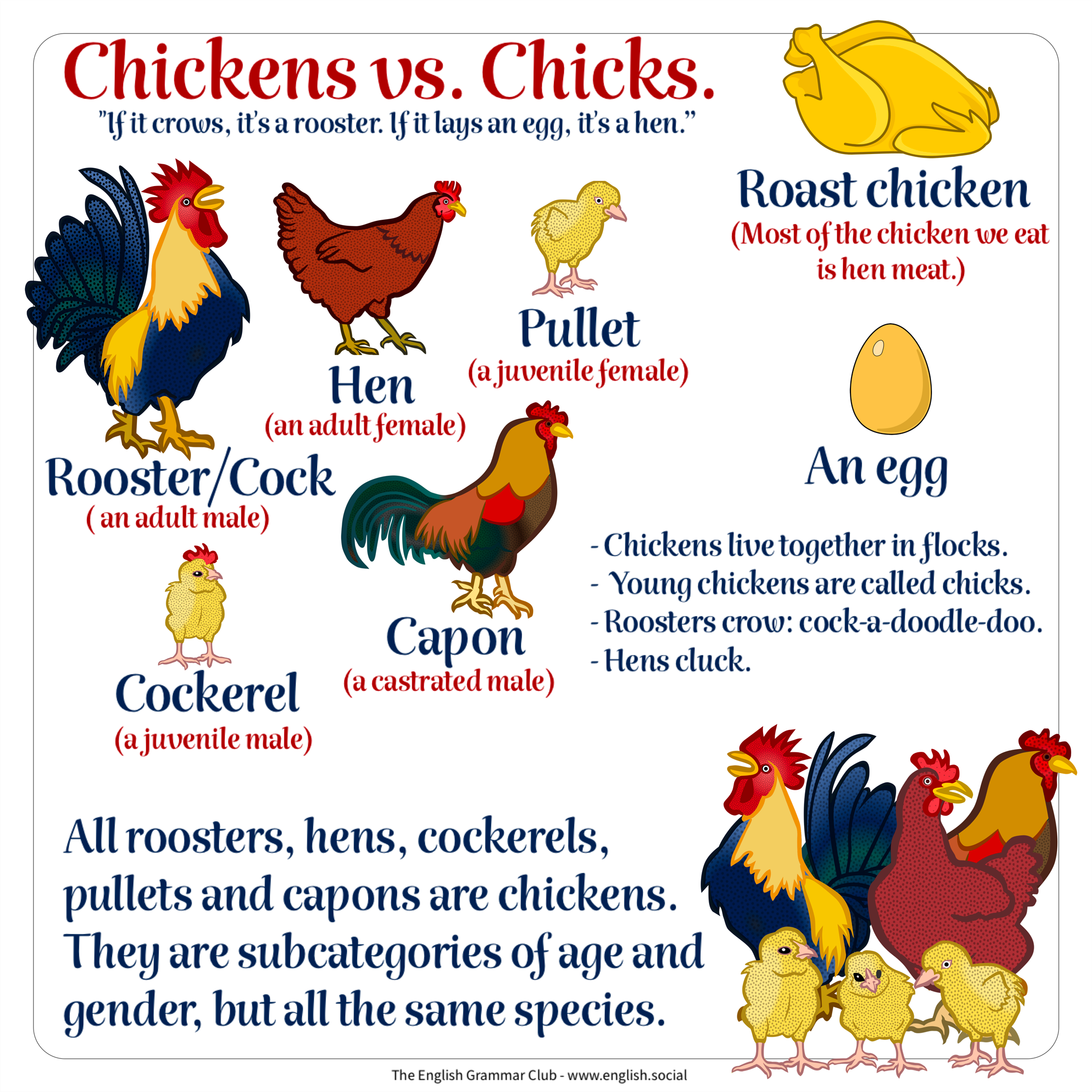
Chickens vs Chicks
All roosters, hens, cockerels, pullets and capons are chickens. They are subcategories of age and gender, but all the same species.
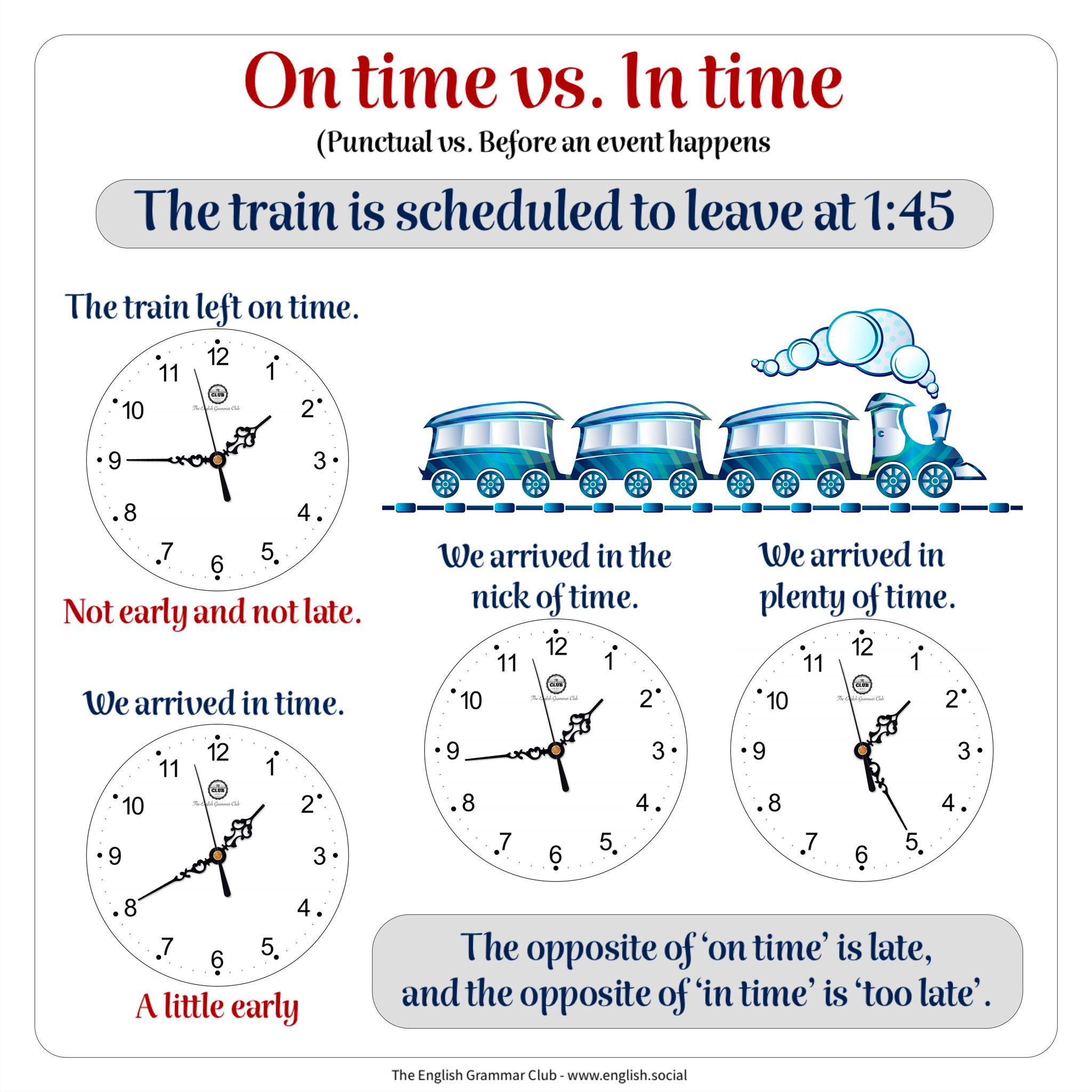
On time vs in time
The opposite of ‘on time’ is late,
and the opposite of ‘in time’ is ‘too late’.
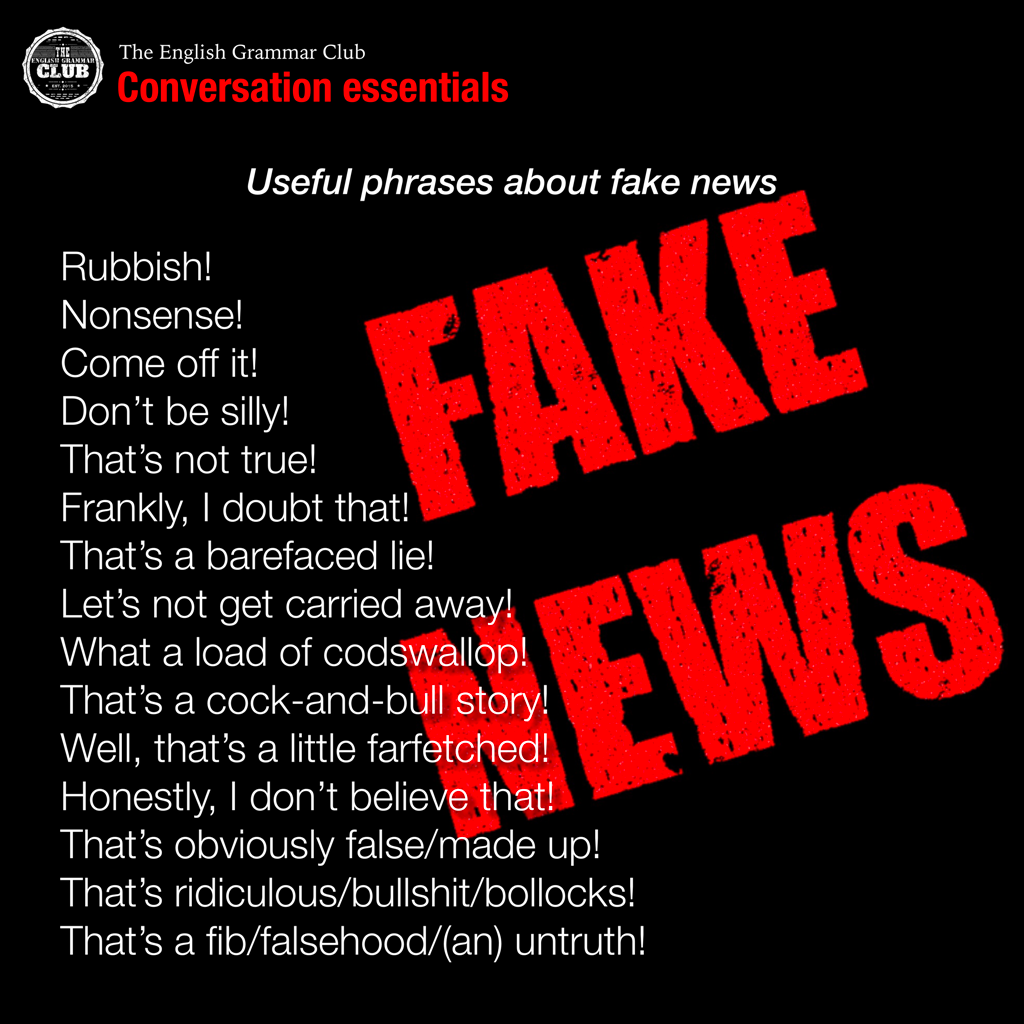
Fake News
Fake news (also known as junk news, pseudo-news, alternative facts or hoax news) is a form of news consisting of deliberate disinformation or hoaxes spread via traditional news media (print and broadcast) or online social media. Rubbish! Nonsense! Come off it! Don’t be silly! That’s not true! Frankly, I doubt that! That’s a barefaced lie! Let’s not get carried away! What a load of codswallop! That’s a cock-and-bull story! […]
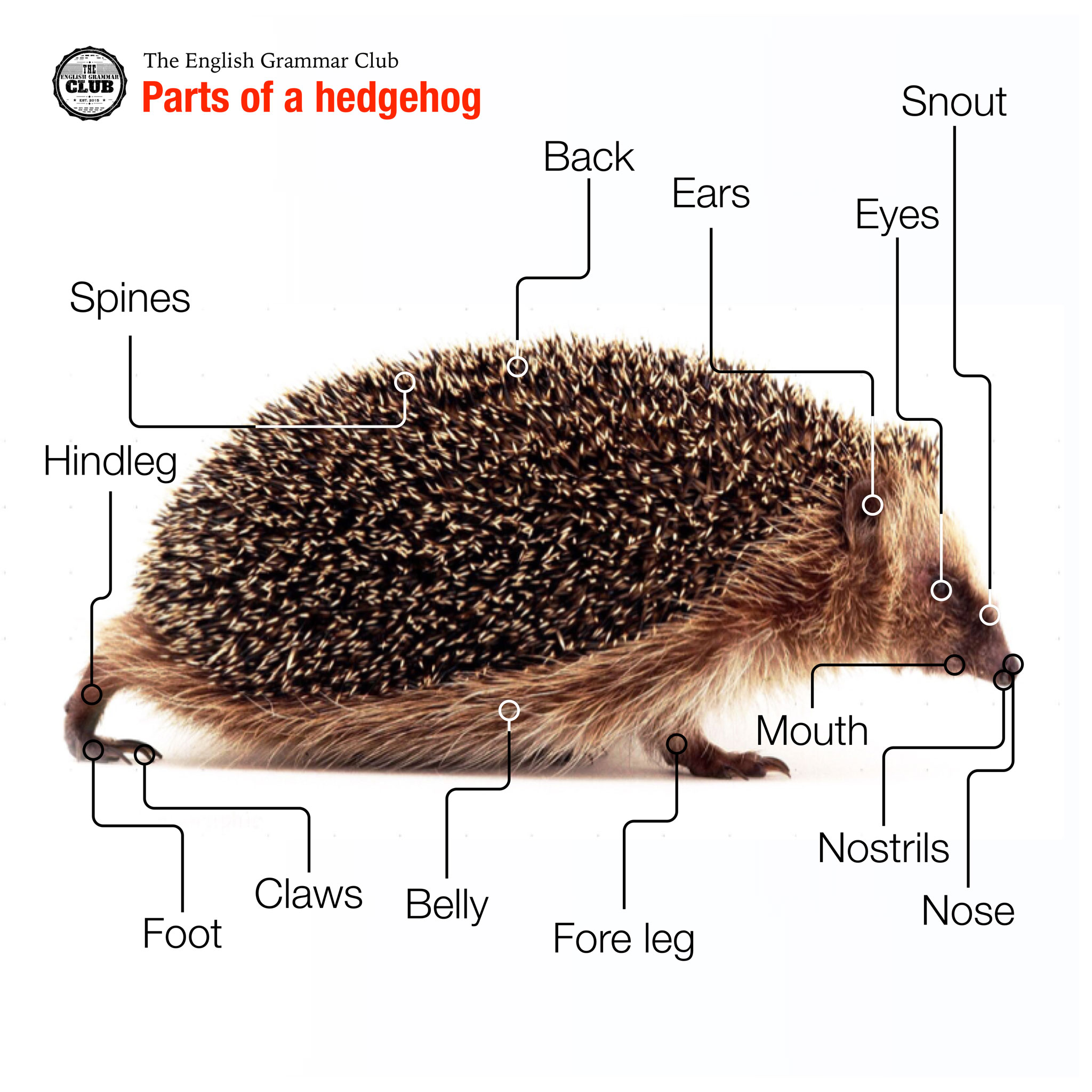
Parts of a hedgehog
Hedgehogs are easily recognized by their spines, which are hollow hairs made stiff with keratin. Their spines are not poisonous or barbed and, unlike the quills of a porcupine, do not easily detach from their bodies. However, the immature animal’s spines normally fall out as they are replaced with adult spines. This is called “quilling”. Spines can also shed when the animal […]
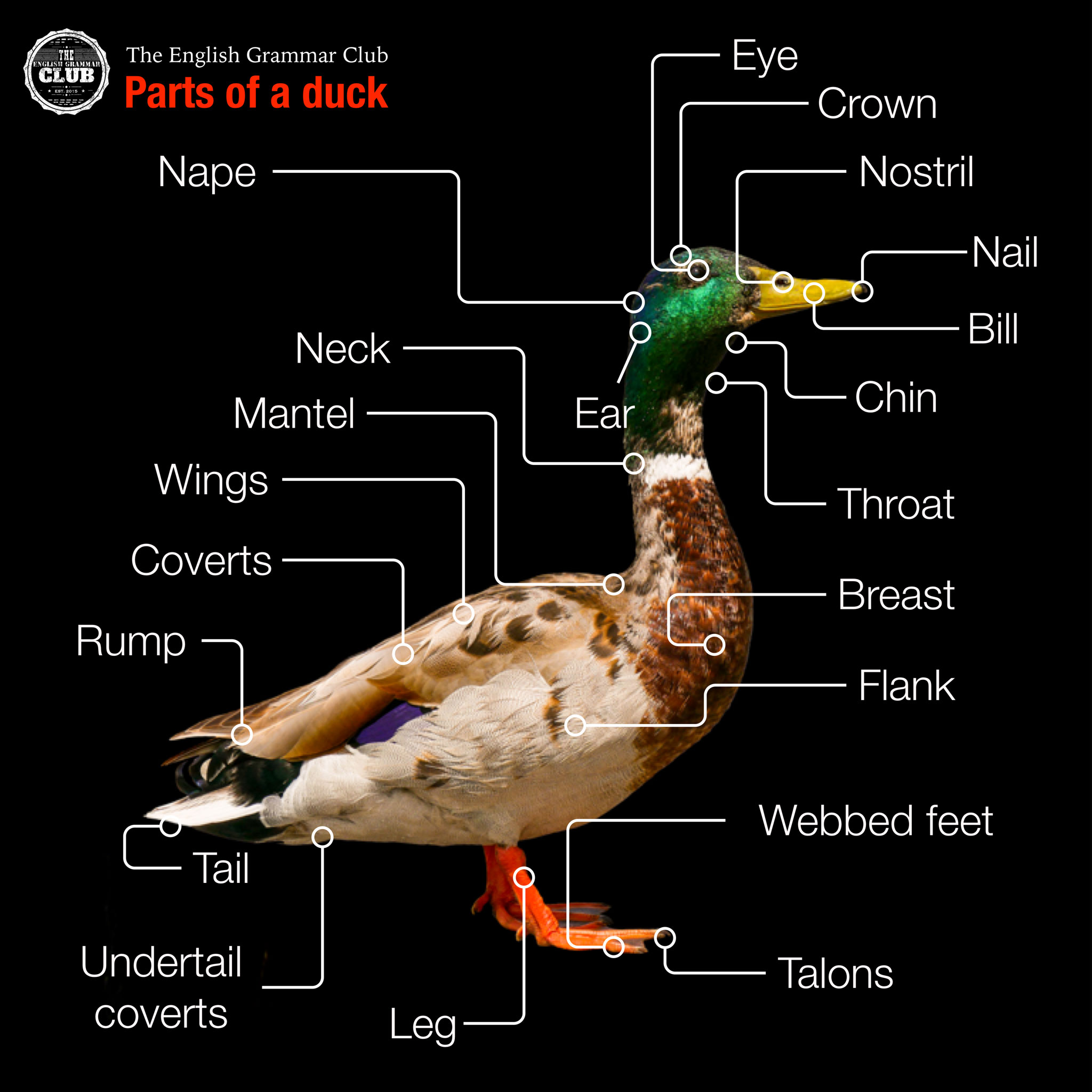
Parts of a duck
The overall body plan of ducks is elongated and broad, and the ducks are also relatively long-necked, albeit not as long-necked as the geese and swans. The body shape of diving ducks varies somewhat from this in being more rounded. The bill is usually broad and contains serrated pecten (biology), which are particularly well defined in the filter-feeding […]
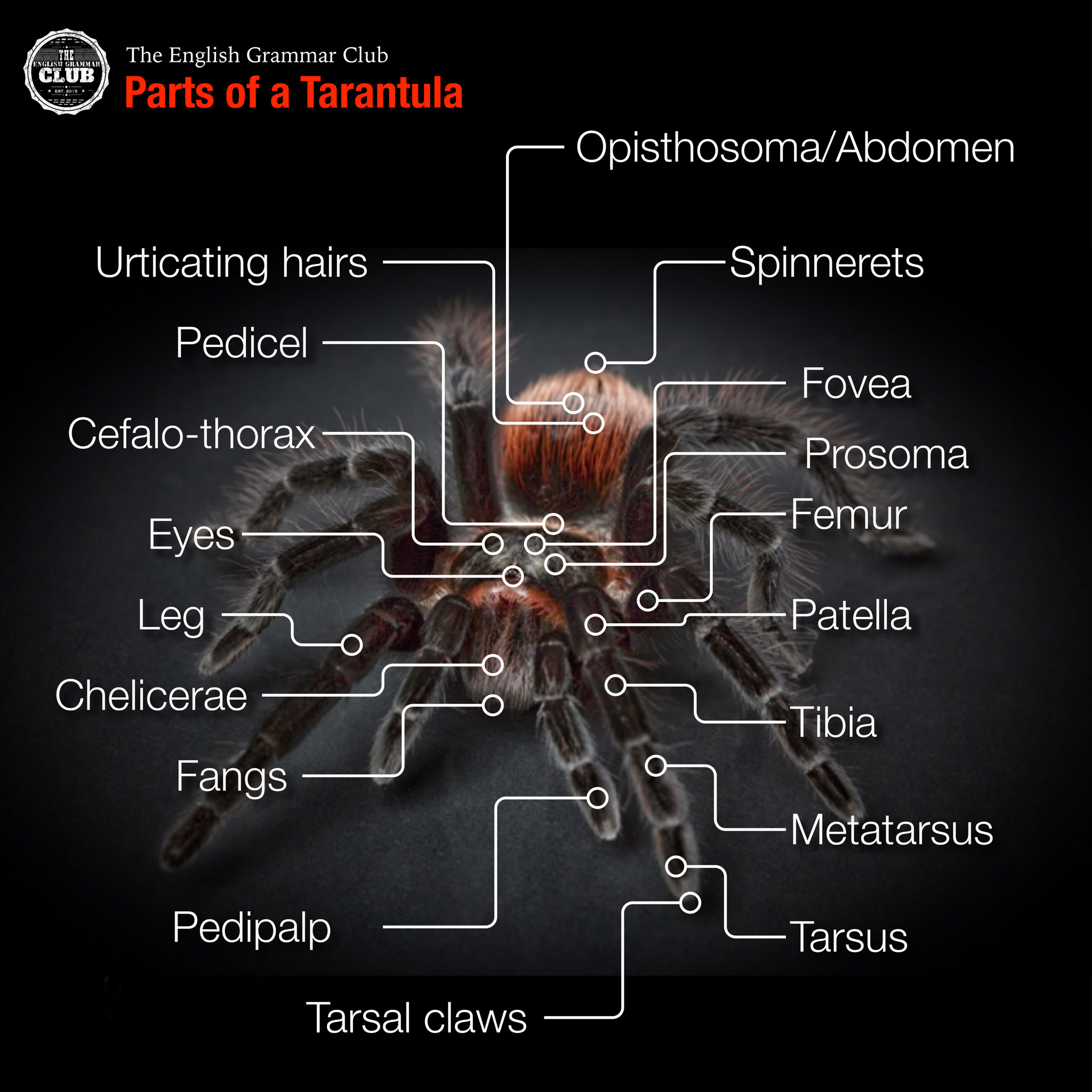
Parts of a spider
Almost all spiders are predators, and most eat insects. They catch their prey in several ways. Some build a spider web, and some use a thread of silk that they throw at the insect.
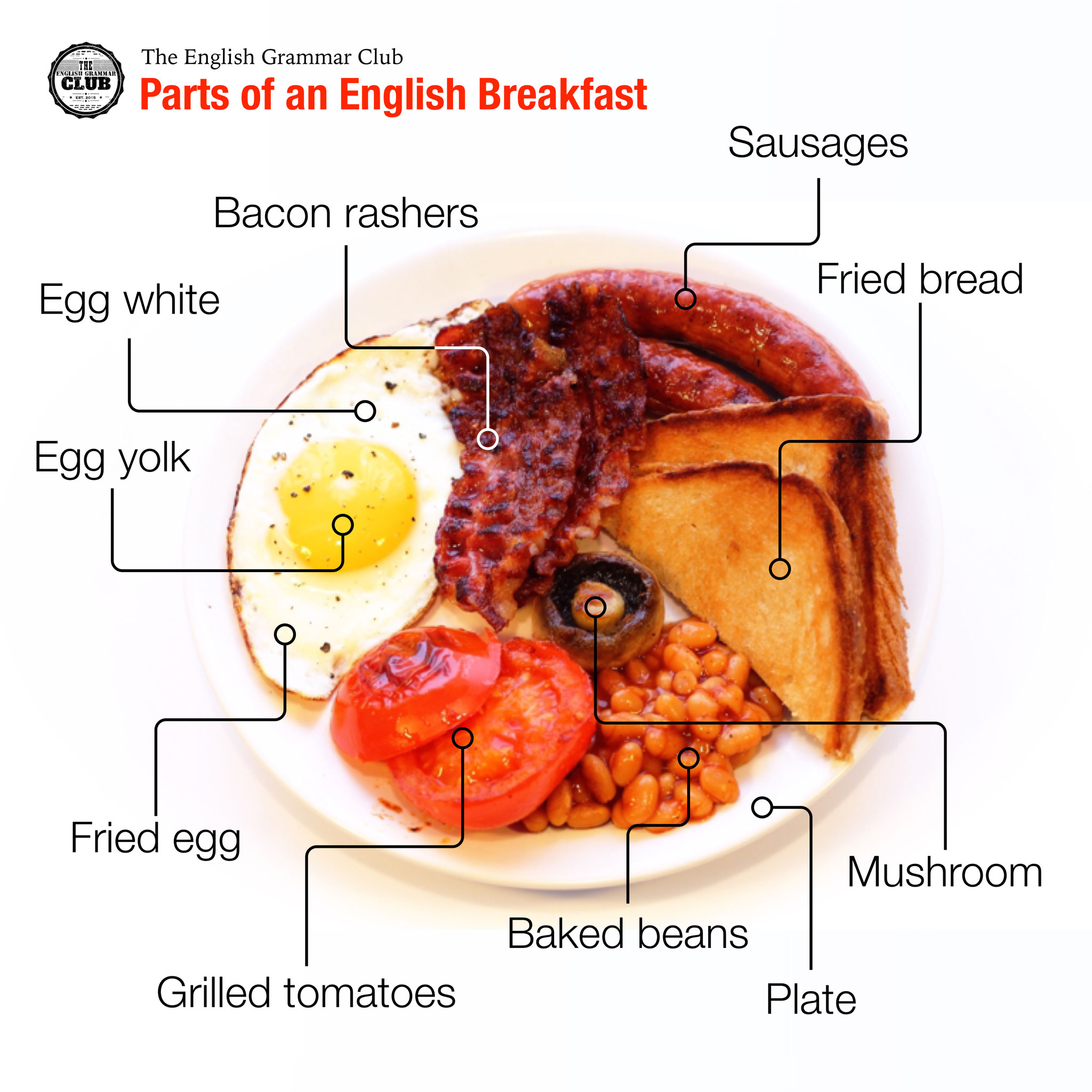
Parts of an English breakfast
A full breakfast is a substantial cooked breakfast meal often served in the UK and Ireland that typically includes bacon, sausages, eggs, black pudding, baked beans, tomatoes and mushrooms and a beverage such as coffee or tea.